Voters in Mid-Atlantic weigh tariff costs against Trump's 35% approval
AP-NORC data shows 25% economic approval as Mid-Atlantic voters decide Senate and governor races under open polls.
By Fatou Mitchell ·
The Associated Press and NORC have released polling data indicating that economic concerns are the primary driver for voters heading to the polls on Tuesday, November 3, 2026. The survey finds that only 25 percent of U.S. adults approve of President Donald Trump's handling of the economy, while 35 percent approve of his overall job performance. Roughly seven in ten respondents say the country is heading in the wrong direction, with most blaming the president for high prices. This sentiment is particularly relevant in the Mid-Atlantic region, where voters are deciding who will control Congress for the final two years of the second Trump term.
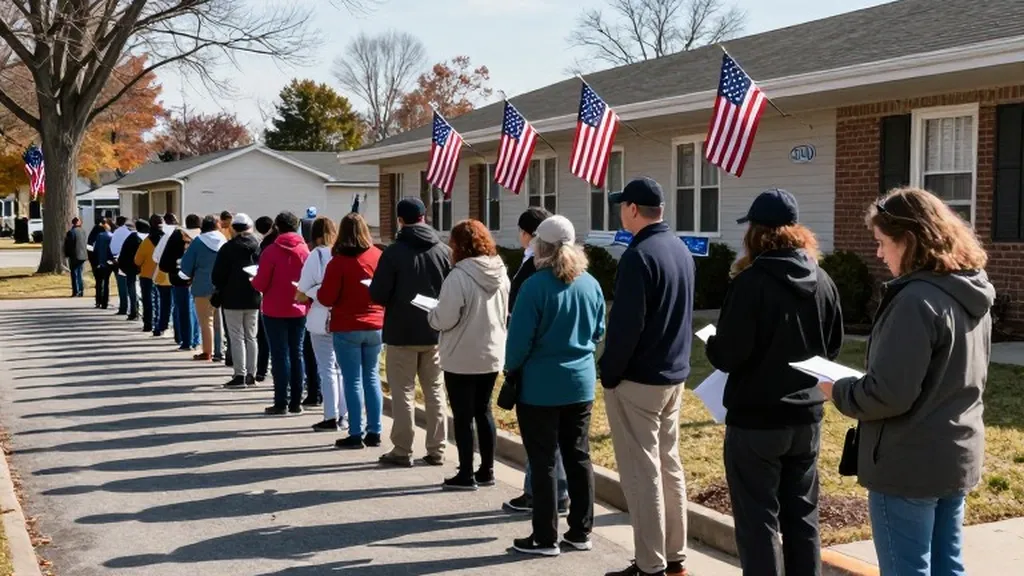
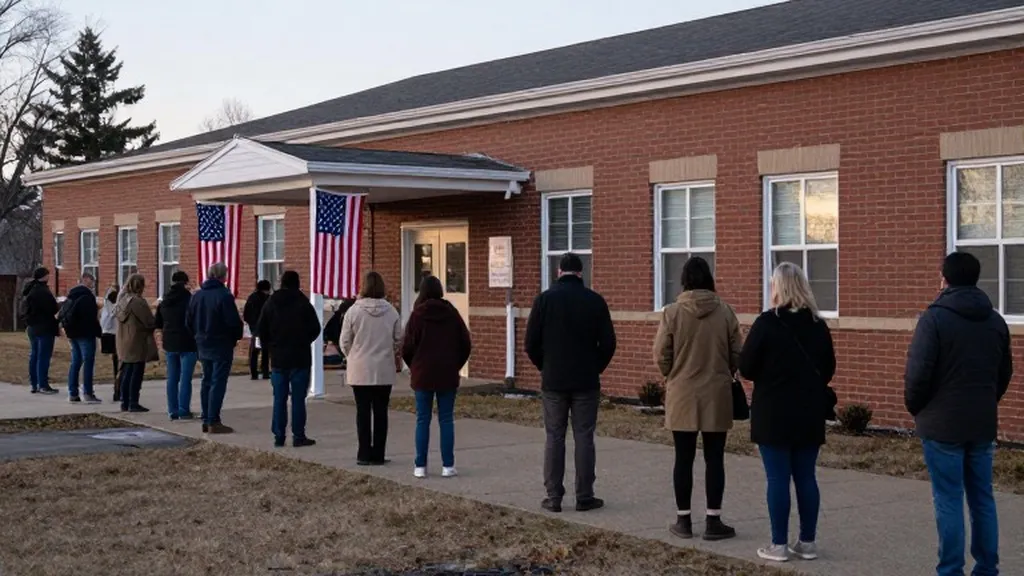
In the Mid-Atlantic, the political stakes are high and the polls remain open. In Pennsylvania, polls are open from 7 a.m. to 8 p.m., and voters are deciding the governor's race featuring incumbent Josh Shapiro. There is no Senate race in Pennsylvania this cycle. In Delaware, polls are also open from 7 a.m. to 8 p.m., and voters are choosing the next U.S. Senator, with incumbent Chris Coons on the ballot. Delaware does not have a governor race this year. In Maryland, polls operate from 7 a.m. to 8 p.m., and the focus is on the governor's race with incumbent Wes Moore. Maryland does not have a Senate contest. In Virginia, polls open earlier at 6 a.m. and close at 7 p.m., with voters deciding the U.S. Senate race where incumbent Mark Warner is running. Virginia has no governor race this cycle.
The Associated Press describes the election as a referendum on the president's second term, noting that voters are struggling with high prices. The AP-NORC numbers highlight that economic anxiety is a central theme. While 35 percent approve of the president's overall performance, the specific approval for economic management is lower at 25 percent. This gap suggests that while some voters may support the president's broader agenda, the tangible impact of tariffs and rising costs is a significant factor in their decision-making process. The data underscores that the economy is the top issue for many voters, even as other factors like border security and party loyalty play roles.
In Raleigh, North Carolina, voter James Moore, a 57-year-old librarian, cited the cost of living as a primary concern. Moore stated that he is paying more taxes, more for healthcare, and more for everything. His comments reflect the broader trend seen in the AP-NORC data, where high prices are a major source of dissatisfaction. Moore's experience is representative of the economic strain felt by many voters in the region. The AP notes that more than 57 million people had already voted as of Monday, surpassing early vote totals from four years ago in many closely watched states. This high level of early voting suggests that many voters have already made up their minds based on these economic factors.
In Palm Beach Gardens, Florida, voter Mark Barker offered a contrasting perspective. Barker said he has been following Trump the whole time and believes the president is doing an awesome job. His comments highlight the divide in opinion, with some voters focusing on the president's performance and others on their personal financial situations. The AP-NORC poll shows that while a majority of voters are unhappy with the economic direction, a significant portion still approves of the president's overall job. This division is evident in the Mid-Atlantic, where voters in states like Pennsylvania and Maryland are weighing these competing narratives as they cast their ballots.
The AP notes that Republicans are bracing to lose the House and are fighting to hold the Senate. The party can lose no more than two House seats to maintain a majority, and can lose only two Senate seats. Democrats need a net gain of three House districts and four Senate seats for a majority. In the Mid-Atlantic, the Senate races in Delaware and Virginia are crucial. In Delaware, incumbent Chris Coons is running for re-election. In Virginia, incumbent Mark Warner is also seeking re-election. The outcome of these races could determine which party controls the Senate. The AP says one or two seats could tip either chamber, making every vote in the region significant.
The AP-NORC data also indicates that about 7 in 10 adults say the country is heading in the wrong direction. This sentiment is likely to influence voters in the Mid-Atlantic, where the economic outlook is a key issue. The AP analysis of AdImpact data shows that 88.1 percent of Republican general election TV ad spending went to states and districts that Trump won in 2024. This heavy spending in safe Republican areas may not translate to gains in the Mid-Atlantic, where the races are more competitive. The data suggests that while Republicans are spending heavily in their own strongholds, Democrats are focusing on competitive districts and states.
In the Mid-Atlantic, the governor races in Pennsylvania and Maryland are also drawing attention. In Pennsylvania, incumbent Josh Shapiro is running for re-election. In Maryland, incumbent Wes Moore is seeking to keep his seat. These races are important because they determine the leadership of the state governments, which can influence policy areas like healthcare and taxation. The AP notes that Democrats are cautiously optimistic about their chances in these races. The outcome of the governor races in Pennsylvania and Maryland could have implications for the state's political landscape in the years to come.
The AP-NORC poll is one of many polls conducted in the lead-up to the election. The data provides a snapshot of voter sentiment, but it is important to remember that polls are not results. The polls in the Mid-Atlantic are open, and voters are still deciding who they will support. The AP notes that the election is a referendum on the president's second term, and the outcome will shape the direction of the country for the next two years. The Mid-Atlantic states, with their mix of urban and rural areas, are likely to be closely watched as the votes are counted.