Senate Stakes: 13 Battlegrounds Decide Control in Mid-Atlantic
With 35 seats up for grabs, Democrats need a net gain of four to take the majority, while Republicans can only afford to lose two in the 13 contested races.
By Fatou Mitchell ·
Midterm elections determine the balance of power in Congress for the final two years of President Donald Trump's second term. Voters are deciding who controls the legislative branch as polls open across the country. In the United States Senate, thirty-five of one hundred seats are on the ballot. This includes thirty-three regular elections and two special elections for the remainder of terms held by Marco Rubio in Florida and JD Vance in Ohio. Republicans currently hold fifty-three seats, while Democrats hold forty-five. Two independent senators caucus with the Democrats. The arithmetic of the Senate is tight. Democrats require a net gain of four seats to secure a majority. Republicans can lose only two seats to maintain their current control of the chamber.
Thirteen Senate races are considered battlegrounds. These contests include open seats where the incumbent is retiring and races where the incumbent is seeking re-election. The margins in these states have shifted in recent years, creating competitive environments. In the Mid-Atlantic region, voters in Delaware and Virginia are deciding the fate of incumbent senators Chris Coons and Mark Warner, respectively. Pennsylvania and Maryland do not have Senate races on the ballot this year, but they are deciding gubernatorial races. The outcome in these four states will influence the regional political landscape and the national tally.
Ratings from major political analysts as of October 27 provide a snapshot of the expected difficulty in each race. Maine is rated as a toss-up by all four major outlets. Iowa and Kansas are rated as toss-ups or tilting Republican. Alaska and Michigan are rated as toss-ups or tilting Democratic. Georgia is rated as leaning or likely Democratic. These ratings reflect the close margins in the 2024 presidential election in these states. For example, Trump won Michigan by 1.4 points and Georgia by 2.2 points. In Maine, Kamala Harris won by 6.9 points. The competitiveness of these states makes them central to the fight for Senate control.
Several key matchups define the narrative of these battleground races. In North Carolina, Democratic former Governor Roy Cooper faces former Republican National Committee chair Michael Whatley. In Georgia, Senator Jon Ossoff is running against Republican Representative Mike Collins. In Ohio, Democratic former Senator Sherrod Brown is challenging Republican Senator Jon Husted. In Michigan, Republican former Representative Mike Rogers is running against Democrat Abdul El-Sayed. In Texas, Republican Attorney General Ken Paxton, who was backed by Trump over incumbent John Cornyn in the primary, faces Democrat James Talarico. In Maine, Senator Susan Collins is running against Democratic former state Senate President Troy Jackson. The Associated Press notes that economic strain and tariffs have made the state competitive.
In New Hampshire, Democratic Representative Chris Pappas faces former Republican Senator John E. Sununu for the seat of retiring Senator Jeanne Shaheen. In Minnesota, four candidates are competing for the seat of retiring Senator Tina Smith, including Democratic Lieutenant Governor Peggy Flanagan and Republican Michele Tafoya. In Kansas, a reliably Republican state, the race has become central to the fight for Senate control. In Alaska, the Trump administration filed a lawsuit related to the certification of the Senate result. These legal and political dynamics add layers of complexity to the election day proceedings. Voters are casting their ballots with these high-stakes matchups in mind.
The mood among voters is shaped by the economy and the direction of the country. The Associated Press describes the election as a referendum on Trump's second term. Voters are struggling with high prices and are angry over an unpopular war with Iran. AP-NORC polling indicates that 35% of U.S. Adults approve of Trump's job performance. Only 25% approve of his handling of the economy. About seven in ten adults say the country is heading in the wrong direction. Most blame the president for high prices. These sentiments are driving voter behavior in the battleground states.
Turnout is a critical factor in determining the outcome. Republicans are bracing to lose the House but are fighting to hold the Senate. The Associated Press notes that one or two seats could tip either chamber. Democrats are described as cautiously optimistic. Republican National Committee Chairman Joe Gruters stated that everything depends on turnout. He said that if they turn out their voters, they win. Democratic Congressional Campaign Committee Chair Suzan DelBene said the American people are angry and want change. These statements reflect the strategic priorities of both parties as polls open.
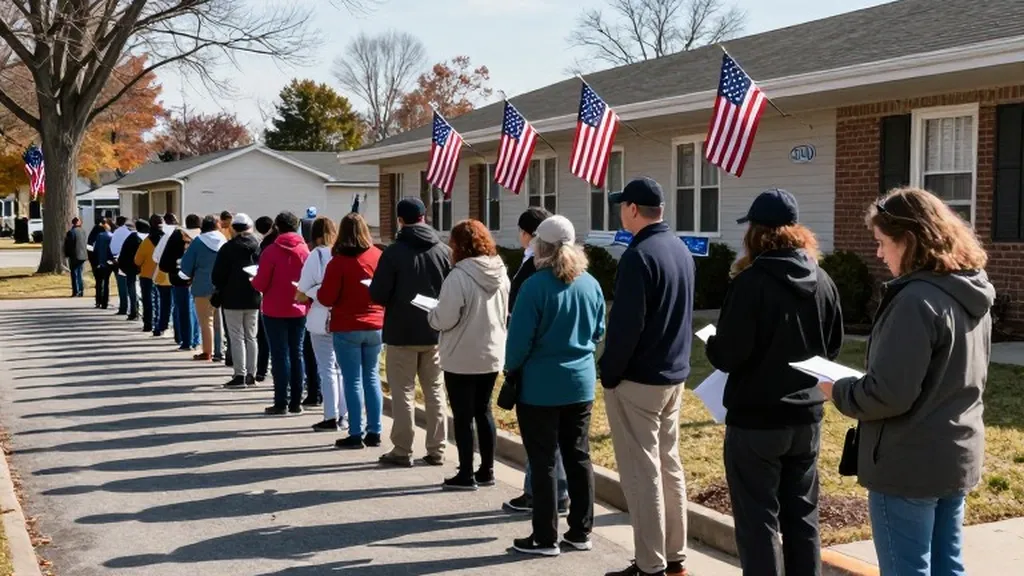
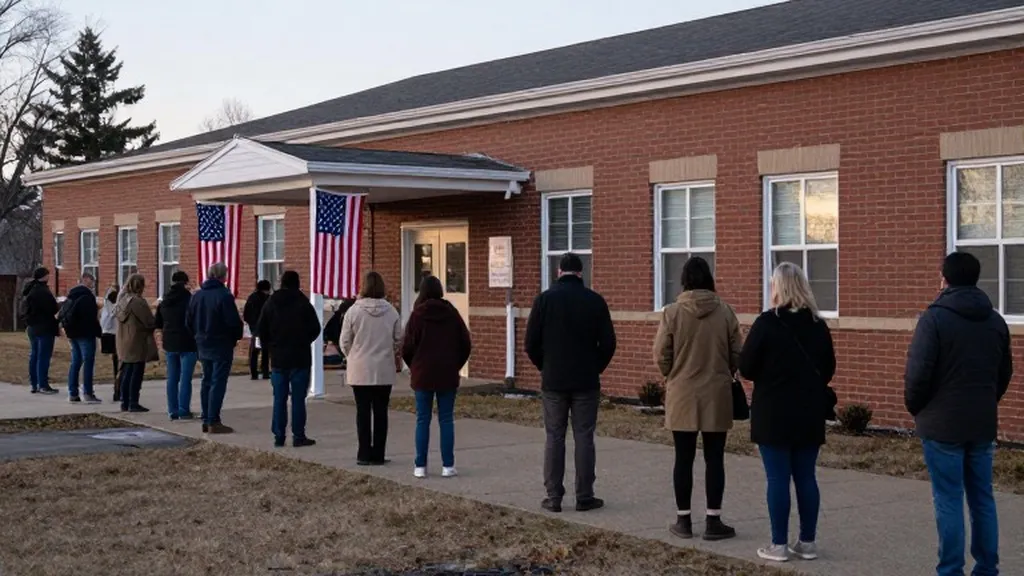
More than 57 million people had already voted as of Monday, surpassing the early vote of four years ago in many closely watched states. This high level of early participation indicates strong engagement from voters. In the Mid-Atlantic, poll hours vary by state. In Pennsylvania, polls are open from 7 a.m. To 8 p.m. In Delaware and Maryland, polls are open from 7 a.m. To 8 p.m. In Virginia, polls are open from 6 a.m. To 7 p.m. Anyone in line when polls close is entitled to vote. Voters are encouraged to check their specific polling place and ID requirements before heading to the polls.
The 2026 elections are likely to be the most expensive in history. Republican committees outraised and outspent Democratic committees, helped by Trump-affiliated groups and Elon Musk. However, at the candidate level, Democrats outraised their opponents. Analysis of AdImpact data shows that 88.1% of Republican general election TV ad spending went to states and districts Trump won in 2024. This includes more than $850 million in areas where he won by 10 points or more. This spending strategy reflects the focus on defending Republican-held seats in strong Republican areas.