Johnson's Warning Ignored as Democrats Sweep Mid-Atlantic
The outgoing Speaker's dire predictions of chaos and DSA control clashed with a decisive Democratic victory in the region's key states.
By Fatou Mitchell ·
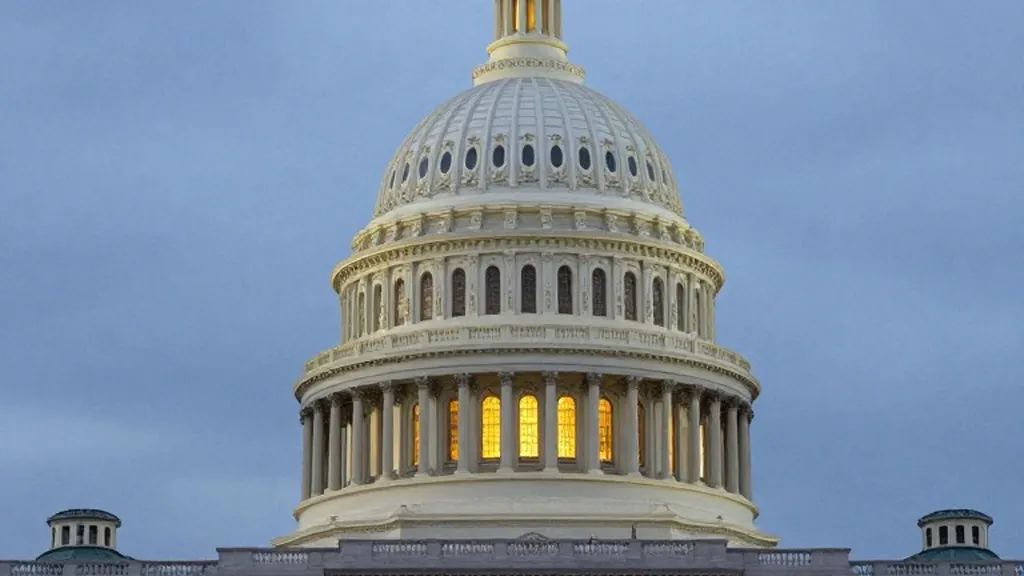
House Speaker Mike Johnson issued urgent warnings in the final days before the election, but voters in the Mid-Atlantic delivered a decisive rebuke to the Republican Party on Tuesday. The results confirm that Democrats have taken full control of the U.S. House and the Senate, ending two years of unified Republican governance. This outcome directly contradicts the narrative Johnson built in his USA Today op-ed and recent Fox News interviews, where he described a Democratic victory as a harbinger of national instability.
Johnson told Laura Ingraham on Fox News that a Democratic Congress would bring "chaos every day for two years." He argued that the new majority would be driven by retribution against the administration and would immediately move to repeal tax cuts and open borders. "You would be turning the keys over to a group of angry Democrats who are going to go after retribution of President Trump and his Administration," Johnson said. He emphasized that the slim Republican margin had allowed for significant legislative wins, implying that a larger Democratic margin would accelerate a shift in policy.
In a USA Today op-ed published on October 30, Johnson warned that even a narrow Democratic House would be "held hostage by the DSA," referring to the Democratic Socialists of America. He cited veteran strategist James Carville, who admitted he would prefer Republicans keep the House over a small Democratic win because the party would be "hostage to the DSA." Johnson described the DSA platform as calling for eradicating borders and abolishing the Senate. He used the recent unrest in France as a "dark harbinger" of what could happen in the United States if Democrats took power, pointing to riots and looting as evidence of a long-term policy failure.
Despite these warnings, the Republican Party suffered major defeats across the region. In Delaware, incumbent Democratic Senator Chris Coons won reelection. This result maintains Democratic control of the state's single Senate seat. In Virginia, Democratic Senator Mark Warner was easily reelected. These victories in the Mid-Atlantic were part of a broader national trend where Democrats gained seats in historically Republican-leaning areas.
The governor's races in the region also reflected the national shift. In Pennsylvania, incumbent Democratic Governor Josh Shapiro won reelection. Ballotpedia notes that polls in the state opened at 7 a.m. And closed at 8 p.m. Shapiro told supporters that voters want to raise the minimum wage and invest in infrastructure. In Maryland, incumbent Democratic Governor Wes Moore retained his office. The Associated Press reported that Democrats won or retained full control of both chambers of the legislature in Pennsylvania, securing a trifecta for the state.
Republicans had touted a strong record during the 119th Congress, which Johnson claimed included $4.6 trillion in lower taxes and a $1.6 trillion reduction in wasteful government spending. In his op-ed, Johnson wrote that Republicans delivered historic results in two years with the slimmest House majority since the Great Depression. He highlighted the creation of the first-ever nationwide school choice program and the launch of Trump Accounts for children. However, voters in the Mid-Atlantic and nationwide appeared to prioritize the cost of living and economic concerns over this legislative record.
Johnson also warned that the Democratic Party had "bent the knee" to its far-left wing. On Fox and Friends, he stated that the new Democratic leadership was "even further left than 'the squad,'" referring to the progressive bloc in the previous Congress. He described the election as a choice between "common sense and absolute crazy." Despite his emphasis on Republican enthusiasm, the AP Voter Poll indicated that about six in ten voters disapproved of how President Trump was handling the presidency, a factor that likely influenced the outcome in competitive districts.
The election results show a fundamental reshaping of power in Washington. Democrats will hold at least 233 seats in the House, while Republicans hold 138. This margin allows the new majority to pass legislation with fewer procedural hurdles than the previous narrow Republican majority. In the Senate, Democrats have won 20 of the 35 contested seats, securing control of the chamber. This divided government setup means the new Congress will have significant power to check the executive branch, a dynamic Johnson warned would lead to gridlock and conflict.
Johnson's departure from the speakership was announced following the election. Two people familiar with his plans said he will not seek reelection as House Republican leader. The new Democratic leadership, headed by Hakeem Jeffries, has promised a 100-day agenda focused on lowering the costs of gas, groceries, and other goods. Jeffries stated, "We hear you. We're going to work hard to deliver on the dramatic change that you deserve." The incoming majority also plans to launch a robust oversight agenda to hold the administration accountable.
The Mid-Atlantic states played a crucial role in this national shift. The retention of Democratic control in Delaware, Maryland, and Pennsylvania, along with the reelection of key senators, signals a durable base of support for the party in the region. As the new Congress prepares to convene in January, the focus will turn to implementing the changes voters demanded. The contrast between the Republican promise of delivery and the Democratic promise of reform will define the political landscape for the next two years.
Voters in the region faced a choice that Johnson framed as existential. He argued that the Democrats sought to tear down the foundations of the nation, while Republicans sought to build. The results suggest that many voters agreed with the Democratic vision of change. The Associated Press reported that the economy was the top concern for voters, with three-quarters saying the economy is "not so good" or "poor." This economic dissatisfaction drove the turnout that delivered the Democratic wave, overriding the Republican warnings of chaos and instability.