Trump rallies, fraud claims, and a 35% approval rating shape the Mid-Atlantic race
As polls open across the region, the President's active campaigning and contested voting procedures contrast with candidates who are keeping a respectful distance.
By James Brooks ·
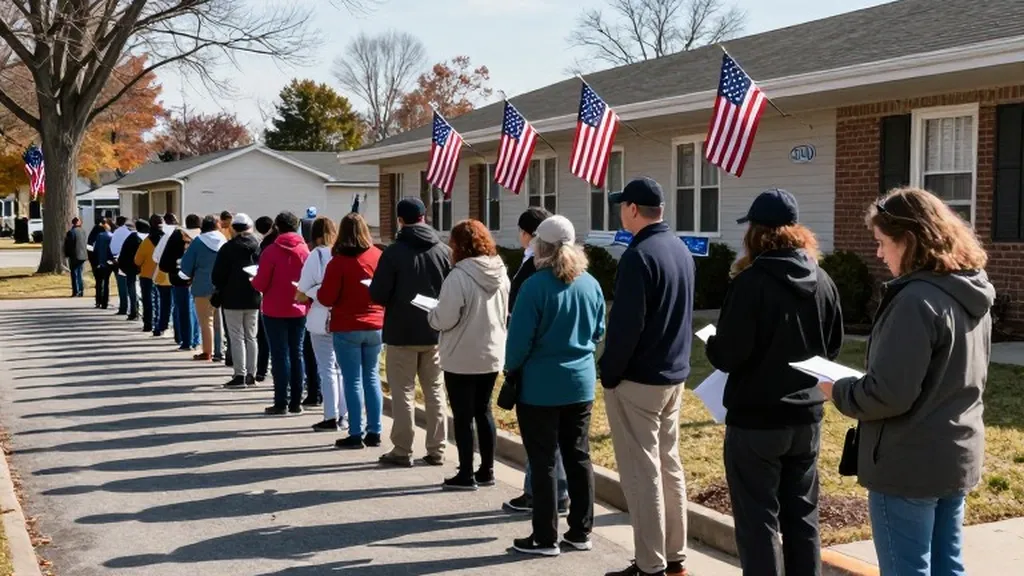
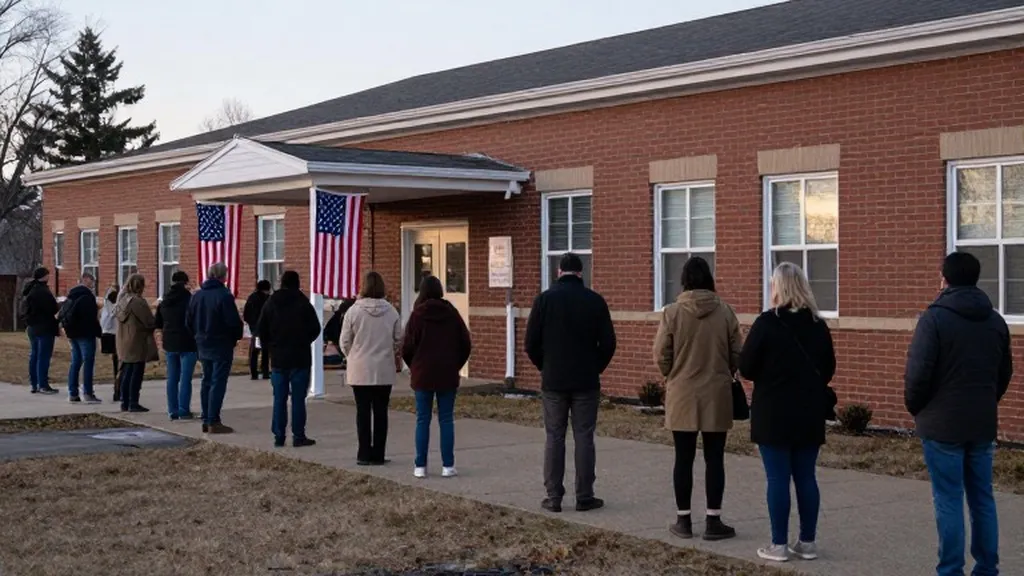
Voters across the Mid-Atlantic are casting ballots on Tuesday, November 3, 2026, in a midterm election that serves as a referendum on President Donald Trump's second term. In Pennsylvania, Delaware, Maryland, and Virginia, polls are open with specific closing times that define the day's final hours. Pennsylvania and Delaware voters have until 8 p.m. To cast their ballots, while Maryland polls close at the same time. Virginia voters have a slightly shorter window, with polls opening at 6 a.m. And closing at 7 p.m. The outcome of these contests will determine the balance of power in Congress for the final two years of the President's current term.
President Trump has played an unusually visible role in this election cycle, holding dozens of rallies to energize the base. His recent schedule included stops in Mississippi, South Carolina, and Texas, with a notable appearance on Sunday in Salina, Kansas. During that event, the President asked supporters to 'pretend I'm on the ballot,' a strategy designed to channel his personal popularity into the contests. Despite his active presence, many Republican candidates in the region have chosen to keep a degree of distance from the President's more personal attacks and specific claims, focusing instead on their own local records.
The President's approval ratings provide a backdrop for this strategic positioning. 35 percent of U.S. Adults approve of Trump's job performance, while 25 percent approve of his handling of the economy. Approximately seven in ten Americans say the country is heading in the wrong direction, with a majority blaming the President for high prices. These numbers suggest a divided electorate, where the President's personal standing does not automatically translate to a sweep for his party, particularly in districts where economic strain is a primary concern.
In the Mid-Atlantic, the races are focused on specific legislative and executive offices. In Delaware, voters will decide the fate of the Senate seat currently held by incumbent Chris Coons. The race is part of a broader contest for Senate control, where Republicans currently hold 53 seats and Democrats hold 45, plus two independents who caucus with the minority. In Pennsylvania, the focus is on the governor's mansion, where incumbent Josh Shapiro is seeking re-election. In Maryland, incumbent Governor Wes Moore is also running for a second term. Virginia voters will choose between candidates for the Senate seat held by incumbent Mark Warner.
The administration's actions regarding election integrity have added a layer of complexity to the process. Trump has continued to make claims about voting fraud, including the assertion that noncitizens vote in large numbers. His administration has filed lawsuits in states such as Alaska and California regarding the certification of results and the handling of ballots. On Monday, a federal judge temporarily barred the administration from executing a plan intended to prevent noncitizen voting, a move that critics argue risks disenfranchising eligible voters. In California, a judge ordered the administration to stop demanding that election officials segregate ballots cast by people on lists of suspected noncitizens.
The election is a moment where voters are struggling with high prices and an unpopular war with Iran. Most voters blame the President for the current cost of living. This sentiment is echoed by voters like James Moore, a 57-year-old librarian in Raleigh, North Carolina, who noted that he is paying more for taxes, healthcare, and everyday goods. Conversely, voters like Mark Barker of Palm Beach Gardens, Florida, express strong support for the President's leadership, indicating a clear divide in voter motivation across the country.
Financial dynamics are also influencing the campaign landscape. The 2026 elections are likely to be the most expensive in history, with Republican committees out-raising and out-spending their Democratic counterparts. This advantage has been bolstered by Trump-affiliated groups and contributions from figures like Elon Musk. However, at the individual candidate level, Democrats have managed to out-raise their opponents. An analysis of AdImpact data shows that 88.1 percent of Republican general election television ad spending went to states and districts that Trump won in 2024, indicating a focus on consolidating his base.
In the Mid-Atlantic, the specific stakes are high for both parties. Democrats need a net gain of four Senate seats to take control of the upper chamber, while Republicans can afford to lose only two. In the House, Democrats need a net gain of three seats to secure a majority. The region's battleground status is heightened by the fact that 21 Democratic-held districts voted for Trump in 2024, while nine Republican-held districts voted for Kamala Harris. This overlap creates a competitive environment where local issues and national sentiment intersect.
As polls close this evening, the administration's legal challenges continue to play out in the courts. The Justice Department has threatened to prosecute local election officials, a move that Democrats fear could lead to interference and intimidation. The U.S. Postal Service has added hours and staff to ensure mail ballots are counted on time, a logistical effort designed to mitigate potential delays. The results from these four states will contribute to the national tally, which will determine whether the President's party maintains its grip on Congress or faces a significant setback.
The election also has implications for the future of the Democratic Party. A strong performance could boost the profiles of potential 2028 candidates such as Gavin Newsom, JB Pritzker, and Pete Buttigieg. It could also complicate the path for Vice President JD Vance, who is often seen as a leading contender for the Republican nomination. The midterm pattern, where a president's party almost always loses seats, is being tested by new congressional maps in several states, though the Mid-Atlantic region is not among those using new maps for this cycle.