Trinh T. Minh-ha Finishes Two-Decade Project on Great Basin Desert
The Vietnamese-American filmmaker concludes her first U.S.-based feature after nearly 20 years of filming in the arid region.
By Fatou Mitchell ·
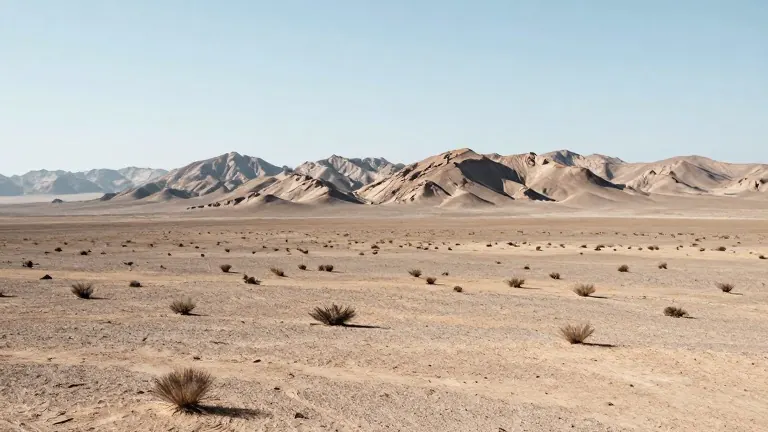
Nearly 20 years after beginning production, Trinh T. Minh-ha has completed her first film set in the United States. The Vietnamese-American filmmaker, writer, and post-colonial theorist finished editing “The Undying Desert” this month. She announced the completion at the Ji.hlava Documentary Film Festival in the Czech Republic, where a retrospective of her work is currently running.
Minh-ha has previously directed features in Africa, China, Vietnam, and Japan. She acknowledged that audiences frequently asked why she had not yet turned her lens toward the country where she resides. She described the Great Basin Desert as majestic and lively, challenging common perceptions that label it as merely arid.
The film explores the relationship between people and the landscape. Minh-ha stated that the project connects to the way of life of indigenous people, particularly Native Americans. She explained that the desert strips away social conventions, allowing individuals to encounter their true selves without the pressure to be polite or competitive. However, she noted that not all visitors engage with the land in this manner. Some treat it solely as terrain for sports, while Native Americans view the desert as layered life that includes ancestors.
Minh-ha is already working on a follow-up project. She co-directed the new film with longtime collaborator Jean-Paul Bourdieu. This upcoming work will also be set in the Great Basin Desert. It focuses on groups of people who isolate themselves in the region to use it as a research center for Mars colonization. Minh-ha said she has observed her own perspective shifting with each trip to the desert.
The director’s body of work includes “Forgetting Vietnam,” “Surname Viet Given Name Nam,” “Reassemblage,” and “What About China?” She avoids focusing on individual narratives, preferring a collective approach that invites audience participation. She described her method as poetic, where the self is shared rather than solitary. Minh-ha emphasized that cinema engages the whole body, not just the eyes. She recalled a viewer describing “Reassemblage” as a film heard with the eyes and seen with the ears, a reaction she deemed perfect.
She advises emerging filmmakers to set their own rules and avoid intimidation from established regulations. Minh-ha argued that documentary creators today have more freedom but must accept greater responsibility for defining their work. She remains focused on building an audience for her distinct approach to filmmaking.