Four months of $4 gas prices complicate Republican midterm strategy
Rising fuel costs from the Iran conflict are testing voter patience and creating competitive races for GOP candidates in key states.
By Fatou Mitchell ·
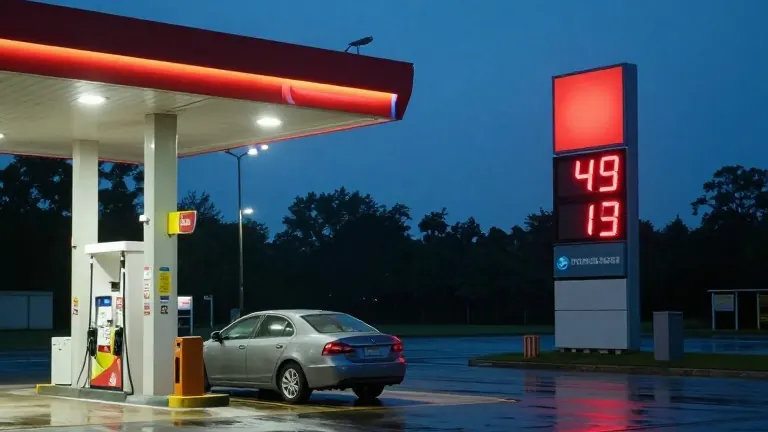
The national average price for a gallon of gasoline has remained above $4 since the middle of June, a figure that has become a central issue for Republican candidates in the November 3 midterms.
President Donald Trump launched the conflict with Iran in March, describing the campaign as a "little detour" that would last only a few weeks. The war has now entered its eighth month. Republican strategists acknowledge privately that the extended duration and rising energy costs are damaging the party's effort to retain control of Congress.
The economic impact is visible in specific regions. Diesel prices are hovering near all-time highs, creating pressure in typically conservative states such as Iowa, Kansas, Ohio, and Texas where races are competitive. Noor Dubow, a 44-year-old dispatcher in Columbus, Ohio, said the high fuel costs tipped his early ballot toward Democrats. He questioned why congressional Republicans were not holding the president accountable for the disruption.
The conflict has also expanded geographically. Iran-backed Houthi rebels have attacked Saudi Arabia's oil infrastructure and airports, prompting a Saudi-led coalition to strike Houthi-held territory in Yemen. The State Department reported over the weekend that it is reducing staffing at four U.S. embassies in the Middle East after intelligence indicated Iran is targeting American personnel.
Polls indicate that voters from both parties want the next Congress to focus on affordability and ending the war. Christopher Borick, director of the Lehigh University Opinion Observatory, noted that the president's messaging is resonating with a shrinking portion of the electorate. "Trump's messaging on the war is resonating with a shrinking portion of the electorate," Borick said. "For voters disappointed with the direction of the conflict, there's little by way of the president's claims that would change their negative outlook."
Trump continues to downplay the economic impact. In a recent rally in Michigan, he stated that he had no regrets about the war and believed the cost was lower than expected. "I thought gas would be double or triple. And it’s a small price to pay for taking a nuclear weapon away from maniacs," Trump told the audience.
Some Republican voters remain supportive but cautious. Clay Coey, a 59-year-old auctioneer in DeWitt, Michigan, said he is willing to pay higher prices to eliminate a security threat but noted there is a limit to that patience. Sean O'Brien, a 21-year-old student at Auburn University in Alabama, said the decision to start the war left him disillusioned with the GOP and expects to vote for a Democrat this year.