
Christie's Poison Research Saved Lives
A new London exhibit reveals how her precise chemistry knowledge helped solve real-world murder cases.
By James Brooks ·
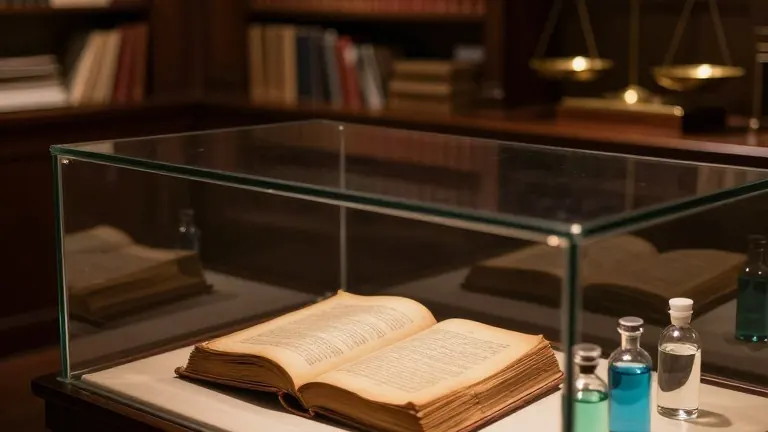
A new exhibition opening at the British Library in London on October 30 will display more than 200 items from the estate of Agatha Christie. The collection includes her personal copy of a pharmaceutical textbook that inspired the murder weapon in her first novel. Curator Lucy Rowland stated that this is the first time these artifacts have been shown to the public.
Christie worked as a nurse and then a trainee pharmacist in Torquay, England, starting in 1914. She studied for the Society of Apothecaries’ Assistant Examination in 1917. Her debut novel, The Mysterious Affair at Styles, published in 1920, used strychnine as the killer’s tool. A reviewer in The Pharmaceutical Journal praised her accuracy, writing, “Miss Agatha Christie knows her job.”
Her scientific precision appears in 41 of her 66 detective novels. Dr. Kathryn Harkup, a former chemist, described the writing as stealth science communication. Harkup noted that Christie conveyed complex medical ideas without obvious exposition. This approach distinguished her from contemporaries who often added extraneous details to show their research.
The exhibit features a 1925 poem titled “In the Dispensary.” In it, Christie wrote, “Here is menace, and murder and sudden death, in these phials of green and blue.” She also displayed a copy of The Pharmaceutical Pocket Book, which contains stains and her initials. This text helped her understand how small errors in dosage could turn a cure into a lethal substance.
Christie’s 1961 novel, The Pale Horse, features thallium as the poison. She received the suggestion from Harold Davis, the chief pharmacist at University College London. The book describes hair loss as a key symptom of thallium poisoning. This detail has helped real doctors identify the rare toxic element in patients.
In 1977, a London nurse named Marsha Maitland identified thallium poisoning in a 19-month-old child. The child had ingested the element from an insecticide in her home. Maitland linked the symptoms to those described in The Pale Horse. The baby recovered fully after four months of treatment.
The physicians who treated the child published a paper acknowledging Christie’s contribution. They wrote, “We are indebted to the late Agatha Christie for her excellent and perceptive descriptions.” A letter from a reader in South America dated 1975 also claimed the novel helped her save an acquaintance from being poisoned by his wife.