Autonomy Strategy Shift: Tesla Builds In-House Maps for FSD
Tesla’s AI leadership confirms the development of a proprietary mapping system to address persistent navigation errors in its Full Self-Driving software.
By Bianca Herrera ·
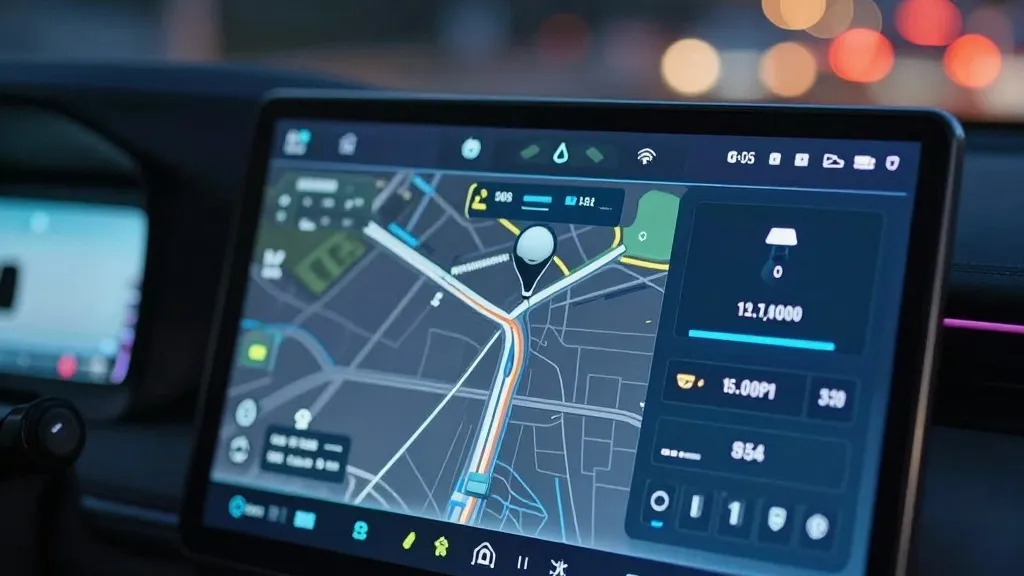
Tesla is officially building its own mapping infrastructure to resolve persistent errors in its Full Self-Driving system, marking a significant strategic pivot from its previous stance. The company’s VP of AI, Ashok Elluswamy, detailed this initiative during the Q3 2026 earnings call, acknowledging that the current reliance on third-party data is no longer sufficient for the system's needs. This move directly addresses common complaints from users regarding inaccurate speed limit readings, route selection, and parking functions.
The decision stems from direct shareholder feedback during a Q&A session, where a retail investor highlighted that mapping remained a critical weakness in FSD performance. Elluswamy agreed with the assessment, stating that Tesla should not depend on external providers for such fundamental data. The new architecture will be AI-based, utilizing collective data from the existing fleet to create a map that learns individual driver preferences and responds to voice commands.
Implementation of this new technology is scheduled to begin with FSD version 15, initially handling the start and end of trips. Over the coming months, the system is expected to take over broader navigation, parking, and destination management tasks. This phased rollout allows Tesla to integrate the new map layer without disrupting the existing end-to-end vision model immediately.
This approach represents a notable departure from Tesla’s historical messaging. In 2019, CEO Elon Musk dismissed high-precision maps as a "huge mistake" and a source of brittleness in self-driving systems, famously calling lidar a "fool’s errand." At the time, the company argued that cameras and AI alone could handle any driving environment. That position has evolved as the fleet has matured and the complexity of real-world driving has become more apparent.
It is important to note that Tesla’s new maps are not the high-definition, lidar-based maps used by competitors like Waymo. Tesla has always used standard navigation maps, but building its own version allows for greater control and accuracy. The primary goal is to improve the system's understanding of the physical environment, particularly regarding static elements like speed limits that the vision system frequently misinterprets.
Recent data underscores the need for this improvement. A Belgian road safety group found that FSD vehicles exceeded limits in 55% of tested 30 km/h zones in Brussels, often because the interface displayed the wrong limit. Meanwhile, the NHTSA is considering an investigation into Tesla Robotaxis speeding through active school zones in the US. These incidents highlight that even simple road information can be a point of failure for a vision-only system.
By leveraging its massive fleet to generate map data, Tesla is adopting a methodology similar to that of other autonomous vehicle operators. While the technology is not yet at the centimeter-level precision of high-definition maps, the iterative process of using fleet data to refine the map suggests a trajectory toward greater detail. This shift brings Tesla’s operational model closer to its peers, acknowledging that a robust, internal map layer is a necessary component of reliable autonomous driving.