22 Starship Launches: The New Benchmark for Lunar Ambitions
A former astronaut warns that NASA’s Artemis program may need more than twenty refueling flights to send a crew to the Moon, raising questions about the timeline.
By Rafael Ortega ·
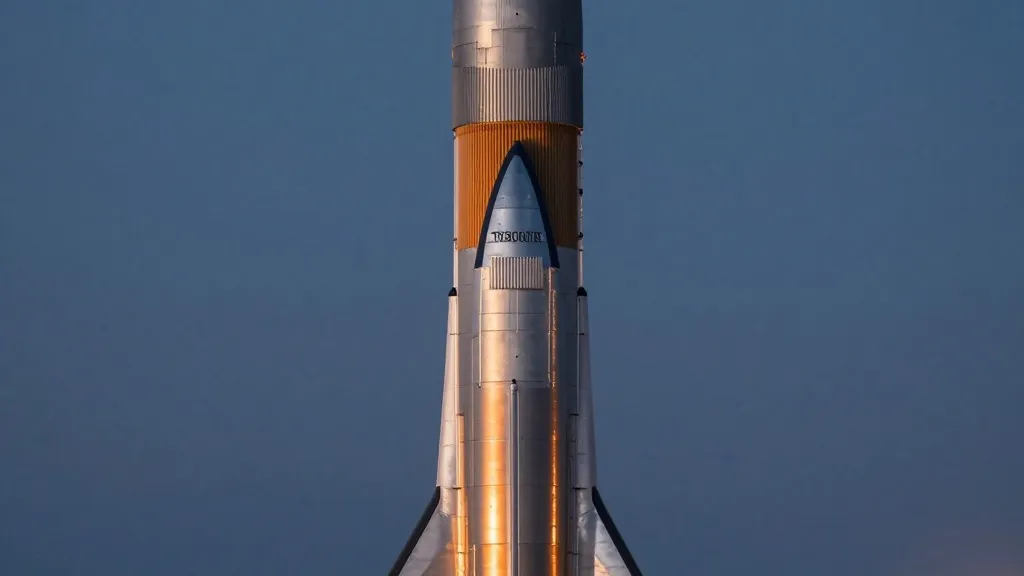
Charlie Precourt, a former NASA astronaut, recently disclosed a stark new calculation regarding the Artemis program, stating that 22 Starship launches are likely required to support a crewed lunar landing. Speaking on Thursday during the quarterly meeting of the NASA Aerospace Safety Advisory Panel, Precourt outlined the logistical hurdles facing the agency. This specific figure, long guarded by NASA as a sensitive metric, represents the estimated number of flights needed to fuel a Starship-based lunar lander in low-Earth orbit. The objective is to load the vehicle with sufficient liquid oxygen and methane propellant to travel to the Moon, land, and return to lunar orbit.
The number 22 stands in contrast to previous, more optimistic projections. For years, NASA officials have treated this count with the discretion typically reserved for nuclear codes, often responding that they did not know the exact figure and therefore would not commit to one. In 2023, Lisa Watson-Morgan, who served as the director of NASA’s Human Landing System, told Ars that while the agency had a general idea, she was reluctant to specify it exactly. She later described the requirement as being in the "high single digits to the low double digits," a range that implied roughly a dozen launches. Other officials have cited figures in the "high teens." The new estimate of 22 signals a significant upward revision in the operational demands of the mission.
The discrepancy between the new estimate and earlier hopes stems from the performance of SpaceX’s Starship rocket. The strategy relies on SpaceX launching a "depot" Starship into orbit, followed by multiple "tanker" Starships to fill it with propellant. Under the earlier estimate of a dozen launches, this would have involved one depot and 11 tankers. The hope among planners was that SpaceX would dramatically improve the lift capacity of the vehicle, thereby reducing the number of tanker flights needed to fully load the lander. However, the new figure suggests that this improvement may not be occurring as rapidly as anticipated.
Precourt’s comments were part of a broader discussion on risks associated with returning humans to the Moon. He highlighted that the increased launch count introduces new variables to the safety equation. The panel’s meeting served as a platform for these critical assessments, with members reviewing the technical and procedural challenges inherent in the Artemis architecture. The focus remained on the dependency of the program on the rapid evolution of commercial launch capabilities.
The stakes for this calculation are high. If the number of required launches remains at 22 or climbs further, it places immense pressure on SpaceX to maintain a high cadence of successful flights. NASA officials are reportedly concerned that the lift capacity improvements may not arrive soon enough for Starship to play a meaningful role in returning humans to the Moon this decade. The Artemis program’s timeline is tightly coupled with the reliability and efficiency of the launch vehicles.
This development underscores the complexity of deep space exploration. While NASA does not possess nuclear weapons, the secrecy surrounding the launch count reflects the critical nature of this metric to the program’s success. Every additional tanker flight represents a potential point of failure and a significant logistical burden. The shift from the "high single digits" to 22 launches marks a pivotal moment in the planning phase of the lunar return.
As the debate continues, the focus will remain on whether SpaceX can bridge the gap between current capabilities and the requirements of a crewed lunar mission. The upcoming months will be critical in determining if the 22-launch estimate holds or if further revisions are necessary. For now, the number serves as a concrete benchmark for the scale of effort required to send astronauts back to the Moon.
Source: Ars Technica