South Dakota Republicans Defend Home Turf Amid National Democratic Surge
While Democrats made significant gains in other red states, South Dakota maintained its Republican dominance in Tuesday's elections.
By News Media House Staff ·
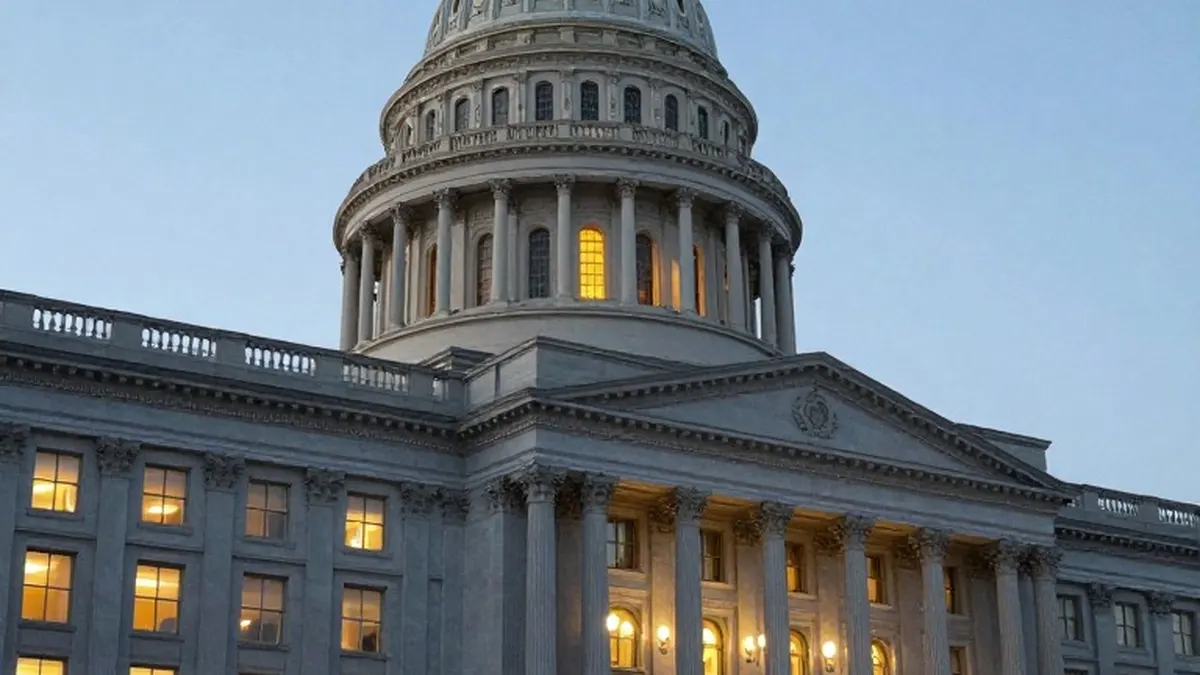
On a night characterized by substantial Democratic victories across the nation, South Dakota stood out as a resilient Republican stronghold. The state largely held its ground politically, even as Democrats made notable inroads in areas surrounding Sioux Falls. This performance distinguished South Dakota from other traditionally red states where the GOP saw its margins shrink considerably.
Republican Governor Larry Rhoden secured approximately 63.5% of the vote on Tuesday. This result was nearly identical to the 63.4% performance President Donald Trump achieved in the state during the 2024 election. Rhoden defeated Democratic candidate Dan Ahlers, who finished with 36.5% of the vote. Ahlers, who described himself as a conservative Democrat, campaigned on themes of affordability, rural healthcare, and education. Despite his moderate approach, the GOP maintained a commanding statewide advantage.
The stability in South Dakota contrasted sharply with results in other deep red states. In Idaho and Wyoming, Republican gubernatorial candidates won comfortably but trailed President Trump's 2024 vote share. In Florida, Democratic nominee David Jolly, who also highlighted his past Republican affiliations and focused on cost of living issues, reduced the GOP vote share to 50%. Tennessee’s Democratic gubernatorial nominee employed a similar strategy to narrow Republican margins significantly.
At the legislative level, South Dakota Republicans maintained overwhelming control, though Democrats flipped four seats in the Sioux Falls area. This marks the state's first legislative gains for Democrats since 2008. Julia Hellwege, a political scientist at the University of South Dakota, noted that the losses were concentrated around the state's largest city. She attributed this shift to a growing population and a less conservative political landscape. A local Democratic official also cited voter opposition to large data-center projects as a contributing factor in the area.
South Dakota House Speaker Jon Hansen credited the party’s success with addressing key issues and delivering tangible results. He emphasized that the GOP focused on real solutions rather than excuses, citing property tax cuts, utility cost regulations, and corporate eminent domain curbs as crucial factors. Hansen stated that the party delivered what the people deserved through actionable policies.
Economic indicators in the state appear to have supported the Republican platform. South Dakota’s unemployment rate has remained near 2% since last September, which is roughly half the national average. Average wages increased by about 4% during 2025. Although the state remains one of the most affordable in the country, data from Realtor.com indicates that rising rent costs outpaced wage growth in 2025.
In federal races, Republican Senator Mike Rounds won re-election with 60.5% of the vote. Attorney General Marty Jackley captured the state's at-large congressional seat with roughly 64% of the vote. While a victory, this figure was down from the 72% secured by fellow Republican Dusty Johnson in 2024. These results suggest the GOP was not entirely immune to the national shift, though the impact was limited.
The modest legislative losses in South Dakota highlighted the broader national trend affecting other Republican strongholds. In Texas, Democrats flipped 21 state House seats held by Republicans. In New Hampshire, Republicans are on track to drop from 222 House seats won in 2024 to just 107. Additionally, Republicans lost control of at least one chamber in the state legislatures of Arizona, Pennsylvania, Wisconsin, Georgia, North Carolina, and Michigan.
Rep. Scott Odenbach, the GOP House Majority Leader, argued that Republicans who lost on November 3 did so because their actions did not align with their promises. He asserted that South Dakota avoided this problem under current leadership. The state’s results demonstrate that while the national political tide shifted toward Democrats, targeted local campaigning and economic performance allowed South Dakota Republicans to maintain their footing.
Originally published by News Media House
More News · National news · Report a business · Got a Story?