Cyclone Arnab strands 180,000 in India after 135kph landfall
Winds stripped power from Andhra Pradesh as the storm moved inland, while Nepal suspended trekking permits and Sri Lanka closed schools.
By Bianca Herrera ·
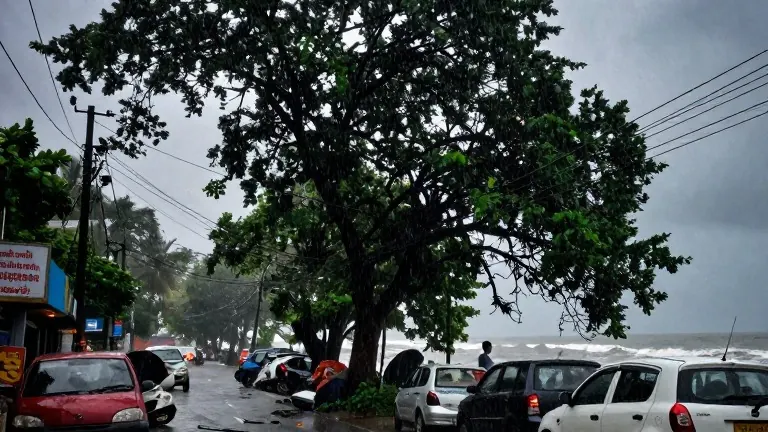
Cyclone Arnab made landfall in Andhra Pradesh on Wednesday morning, October 28, bringing winds of 135kph (84mph) and heavy rain to India’s eastern coast. The storm knocked out electricity and blocked highways with fallen trees. No casualties were reported immediately after arrival.
At least 180,000 people left their homes in Andhra Pradesh and Odisha on Tuesday, ahead of the storm. Authorities noted that more than 12 million residents lived in the cyclone’s path. Travel and education were disrupted as flights and trains were cancelled and schools closed.
The India Meteorological Department classified Arnab as a “very severe cyclonic storm,” the third-highest rank on their scale. The category dropped to “severe” as the system moved inland. The initial impact included strong gusts and intense precipitation across the coastal state.
In Kakinada district, rising water threatened homes. One resident described the scene, saying, “No one knew whose house the water would rush into next or whose home would be submerged.” The uncertainty centered on which low-lying properties would flood next.
The Meteorological Department forecast a storm surge of up to 1.5 metres above tide level. Officials warned that low-lying areas of Andhra Pradesh, where the cyclone crossed the coast on Wednesday, faced the highest risk of inundation.
Warnings extended to Nepal, where authorities told tourists to avoid high-altitude zones on Tuesday. Officials cited risks of torrential rain, snowstorms, and avalanches from Thursday through Saturday. Nepal halted the issuance of trekking permits for three days, a suspension that occurred during the peak hiking season when about 750 permits are issued daily.
Nepal is still recovering from a glacial mountain collapse in August that killed more than 1,400 people and left at least 5,000 missing. In Sri Lanka, schools closed as the Department of Meteorology warned of flash floods and landslides linked to the storm.